Secure Payroll Processing Procedures: A 2026 Guide for Small Businesses

What if a single administrative oversight cost your business over $845 per employee this year? With the average cost of non-compliance reaching that staggering figure in 2026, the stakes for your secure payroll processing procedures have never been higher. You've worked hard to build your company, so it's natural to feel anxious about IRS penalties or the sophisticated fraud schemes that target small business accounts. You deserve to feel like a confident leader rather than a stressed data entry clerk.
We understand that the technical setup of direct deposits and the new Roth catch-up requirements for high earners can feel like a moving target. That's why we've designed this guide to help you implement multi-layered security protocols that protect your bottom line from errors and "ghost employees." By establishing a rigorous procedural framework, you'll transform your payroll from a source of anxiety into a reliable, automated asset. We'll walk you through the essential steps to achieve a "set-it-and-forget-it" workflow, giving you total confidence during tax season and the freedom to focus on your growth.
Key Takeaways
Learn why treating security as a strategic asset empowers your business to thrive while maintaining absolute compliance with 2026 regulations.
Discover how to implement secure payroll processing procedures using the "Segregation of Duties" principle to prevent internal fraud and errors.
Identify the critical vulnerabilities of manual spreadsheets and explore how managed payroll frameworks offer a level of protection that automation alone cannot provide.
Follow a practical five-step audit to verify every payee and monitor software access, ensuring your payroll remains accurate and transparent.
Understand how professional bookkeeping oversight transforms payroll from a stressful monthly task into a source of reliable strategic insight.
Table of Contents
The Foundation of Secure Payroll Processing Procedures
Secure payroll processing procedures represent the systematic protection of your business's financial data and liquid funds. It's not merely a recurring administrative task; it's the heartbeat of your operational integrity. To grasp the full scope of these responsibilities, it's helpful to review What is Payroll and how it integrates with your broader accounting ecosystem. In 2026, establishing these protocols has become a vital strategic asset for Phoenix small businesses. When you treat security as a foundation, you create a culture of reliability that attracts top-tier talent and reassures your investment partners.
Small errors in data entry or tax withholding can trigger a massive cascade of financial issues. With the Social Security wage base rising to $184,500 this year, even a minor miscalculation can lead to significant underpayments. You must learn how to avoid costly payroll mistakes to keep your capital where it belongs. This is why we advocate for the "Diligent Guardian" approach. This philosophy moves beyond simple data entry. It positions your financial records as a protected fortress, ensuring every dollar is accounted for and every regulation is met with precision.
To better understand the steps involved in this process, watch this helpful video:
Why Basic Software Isn’t a Complete Security Plan
Many business owners believe that purchasing a software subscription is a total solution. While modern platforms provide essential encryption for data in transit, they don't address internal procedural gaps or sophisticated social engineering risks. Automated systems are inherently reactive. They might alert you to a discrepancy, but only after the funds have left your account. A proactive strategic bookkeeping mentor looks ahead to identify anomalies before they become permanent records. Implementing robust secure payroll processing procedures provides the human oversight necessary to ensure your software serves your business goals accurately.
The Legal and Financial Stakes of Payroll Security
Payroll errors do more than just hurt your bank account; they erode employee trust instantly. For specialized industries like legal and dental practices, financial transparency is a regulatory necessity rather than a suggestion. These businesses face intense scrutiny regarding fund management and trust accounting. Maintaining impeccable records is the only way to satisfy auditors and protect your professional license. Ultimately, payroll compliance is the alignment of your internal financial records with the specific state and federal laws governing compensation and taxation. When these systems are in sync, your business operates with a level of clarity that fuels long-term growth.
Implementing Multi-Layered Internal Controls for Payroll Safety
Software encryption is only half the battle when protecting your capital. True safety comes from a structural approach where no single individual has total control over the flow of funds. This multi-layered strategy forms the core of secure payroll processing procedures, acting as a fail-safe against both external threats and internal errors. By building checks and balances into your workflow, you transform a vulnerable administrative task into a robust, protected system.
Segregation of duties is your most effective shield against internal fraud. Even in a small Phoenix office with a lean team, you can split tasks to ensure oversight. One person should be responsible for entering hours and updating employee records, while a second person, often the business owner, serves as the final reviewer and approver. This simple split prevents "ghost employees" or unauthorized pay rate changes from slipping through the cracks. If you're just starting to build your team, understanding how to set up payroll with these checkpoints in mind will save you from significant stress during your first audit.
Regular bank reconciliations serve as your secondary defense. By meticulously matching your payroll ledger to your actual bank statements every month, you spot anomalies before they compound into financial disasters. This practice is a cornerstone of our "Clean Books" philosophy. A tidy set of records makes fraud visible because there's no clutter for it to hide behind. When your books are transparent, you gain the clarity needed to make strategic decisions rather than reactive ones. Maintaining this level of detail ensures your business remains resilient against the average cost of non-compliance, which can exceed $845 per employee in 2026.
Digital Hygiene and Data Protection Standards
Digital security must be as rigorous as your physical controls. Multi-Factor Authentication (MFA) is non-negotiable for all cloud-based accounting platforms; it's the simplest way to block 99% of bulk automated attacks. Sharing login credentials for QuickBooks Online is a high-risk behavior that compromises your entire security chain. Instead, assign individual permissions based on specific job roles. This limits access to sensitive employee PII (Personally Identifiable Information) and ensures every action is logged and traceable. With new 2026 privacy laws in states like California and Virginia imposing stricter data collection rules, these habits are now a legal necessity. For added protection, avoid sending sensitive tax documents through unencrypted email. Use secure portals to ensure that your team's personal data stays private. If you find the technical setup of these safeguards overwhelming, partnering for Payroll Management can provide the expert oversight you need to lead with confidence.
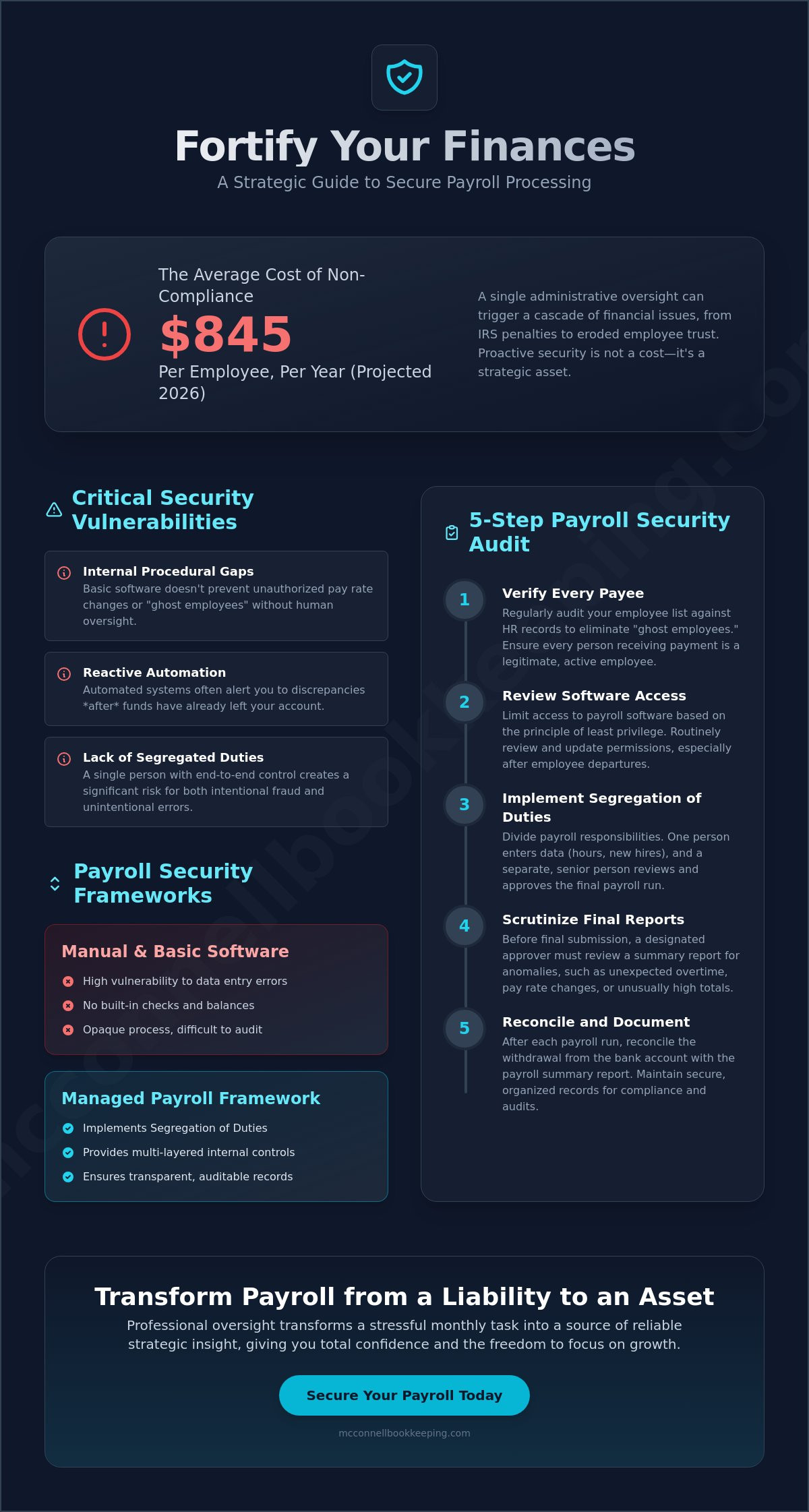
Comparing Manual vs. Managed Payroll Security Frameworks
Choosing the right framework for your business is a pivotal decision that impacts both your security and your sanity. While many Phoenix startups begin with simple spreadsheets, the transition to secure payroll processing procedures requires a move toward more robust, professional systems. Manual methods often feel "free" at first, but they carry hidden costs that can jeopardize your company's financial health. You deserve a system that works for you, rather than one that creates a second job.
The Hidden Risks of DIY Manual Payroll
DIY manual payroll often relies on fragile Excel formulas that are prone to human error. A single wrong cell reference or an accidental deletion can lead to massive tax underpayments, resulting in the IRS penalties that many business owners fear. Beyond formula errors, staying compliant with Arizona-specific requirements adds another layer of difficulty. Arizona has unique withholding elections and reporting standards that are difficult to track manually. Every hour you spend troubleshooting a spreadsheet is an hour taken away from scaling your business. Manual entry isn't just risky; it's a significant time-drain that prevents you from acting as the visionary leader your company needs.
Managed Payroll: The Strategic Partnership Advantage
Pure software automation is a step up from manual entry, but it lacks the critical eye of a professional. Software alone won't tell you if a payroll trend looks suspicious or if your benefits deductions aren't aligning with your financial statements. This is where managed payroll offers a distinct advantage. By choosing outsourced payroll processing, you gain a "strategic mentor" who ensures your system is configured correctly from day one. This partnership transforms a mundane task into a high-level strategic asset.
Our approach integrates your payroll data directly into your broader financial picture. Having a QuickBooks ProAdvisor monitor your system ensures that your secure payroll processing procedures are followed meticulously every pay cycle. This level of oversight is a core component of our peace of mind bookkeeping services. When you shift from a reactive, software-only model to a proactive, managed partnership, you gain the clarity needed to lead with confidence. You're no longer just "getting payroll done"; you're building a foundation for sustainable growth and liberation from administrative stress.
A 5-Step Guide to Auditing Your Current Payroll Security
A regular audit is the ultimate defense for your business's financial integrity. It's not about finding fault; it's about verifying that your secure payroll processing procedures are functioning exactly as intended. By taking a proactive stance, you transform a potentially stressful review into a routine confirmation of your company's health. Follow these five steps to ensure your system remains a fortress in 2026.
Step 1: Verify Employee Records. Every payee in your system must be a verified, active employee. Cross-referencing your payroll list with current HR files ensures that no unauthorized individuals are receiving funds.
Step 2: Review Access Logs. Checking who has logged into your payroll software recently allows you to maintain strict control over sensitive data. If you see an unfamiliar login or an employee accessing the system outside of standard hours, you can act immediately to investigate.
Step 3: Reconcile Every Pay Period. Matching your payroll totals to actual bank withdrawals immediately after processing creates a clear audit trail. This practice prevents small discrepancies from growing into significant financial leaks.
Step 4: Update Tax Compliance. You must verify that your system uses the 2026 Social Security tax rate of 6.2% and respects the updated wage base of $184,500. Staying current with these rates protects you from the anxiety of year-end IRS penalties.
Step 5: Secure the Workflow. Ensure all physical and digital records are under "lock and key." Using encrypted digital vaults for credentials and locking physical filing cabinets keeps sensitive employee data private and compliant with 2026 privacy laws.
Performing a "Ghost Employee" Audit
Ghost employees are fictitious workers added to a payroll system to siphon funds into a fraudulent account. They often appear in unmonitored systems where the person entering data also has the authority to approve payments. You can catch these discrepancies by performing a simple cross-reference between your payroll ledger and your actual HR employee files. Our monthly bank rec services are specifically designed to highlight these anomalies by ensuring every dollar leaving your account matches a legitimate, verified expense. When your books are clean, fraud has nowhere to hide.
Updating Your Arizona Payroll Compliance
Arizona businesses must navigate specific state requirements, including the A-4 withholding form and State Unemployment Tax (SUTA) rates. It's also vital to stay current with any local ordinances in Scottsdale or Mesa that might impact your reporting. We suggest a "strategic pause" every quarter to review your compliance status with a professional mentor. This proactive check ensures your internal records align perfectly with state and federal laws, giving you total confidence during tax season. If you want to liberate yourself from the stress of these manual checks, our expert Payroll Management service provides the diligent guardianship your business deserves.
Elevating Your Business with Professional Payroll Management
Professional bookkeeping transforms your payroll from a stressful monthly deadline into a fountain of strategic insight. When you have a dedicated partner overseeing your secure payroll processing procedures, you no longer have to worry about whether a formula is broken or a tax rate is outdated. This transition provides the relief and clarity you need to lead your company with renewed energy. You shift from a state of administrative uncertainty to one of informed confidence, knowing that your financial foundation is being watched over by experts who are as invested in your success as you are.
McConnell Bookkeeping serves as a strategic mentor for small businesses throughout Mesa and Phoenix. We don't just process numbers; we provide the diligent guardianship required to protect your business from the risks discussed throughout this guide. By establishing a rhythm of reliability, we ensure that your payroll is accurate, your employees are satisfied, and your records are audit-ready at all times. This level of oversight liberates you from the minute details of data entry, allowing you to focus on high-level growth opportunities that drive your business forward.
The McConnell Bookkeeping Difference
Our approach is defined by a meticulous commitment to the prosperity of our local community. We understand the specific challenges facing Phoenix-area entrepreneurs, from navigating Arizona's unique withholding forms to meeting the 2026 e-filing mandates. For those who prefer a hands-on approach to their financial tools, we offer specialized QuickBooks training for business owners. This service empowers you to understand the "why" behind your financial data while we maintain the "how" through professional oversight. We act as your neighborly expert, combining high-level competence with a genuine desire to see your business thrive.
Your Path to Financial Liberation
Our onboarding process is methodical and direct, ensuring your transition to professional management is smooth and reassuring. We begin by analyzing your current workflow to identify any vulnerabilities in your secure payroll processing procedures. Once we establish a clean baseline, we implement the multi-layered controls needed to protect your assets and ensure compliance with 2026 regulations. This collaborative relationship doesn't just end with a paycheck; we actively look for growth opportunities hidden within your financial data. You'll gain a partner who looks ahead to identify challenges before they impact your bottom line. Empower your business with secure, professional payroll procedures today and step into a future of clarity and growth.
Master Your Business Growth with Secure Payroll Operations
Establishing secure payroll processing procedures is the definitive step toward reclaiming your focus as a business leader. By implementing multi-layered internal controls and performing regular audits, you protect your capital from the rising costs of non-compliance and sophisticated fraud. You've learned that while software provides a technical foundation, true security requires a diligent guardian to oversee the systematic protection of your funds and employee data.
At McConnell Bookkeeping, we act as your strategic mentor, combining local Mesa and Phoenix ownership with specialized expertise in legal and dental bookkeeping. As QuickBooks ProAdvisor Certified experts, we ensure your payroll is not just processed, but meticulously managed to support your long-term prosperity. You deserve the relief that comes from knowing your financial integrity is in safe, capable hands. We are committed to providing the clarity and transparency you need to make informed decisions for your company's future.
Secure Your Payroll and Reclaim Your Time with McConnell Bookkeeping
Your journey toward financial liberation starts with a single proactive choice. We're here to help you lead with absolute confidence and watch your business thrive in the years ahead.
Frequently Asked Questions
What are the most common types of payroll fraud in small businesses?
Ghost employees and unauthorized pay rate changes are the most frequent threats facing small business owners. Ghost employees involve adding fictitious workers to the system to divert funds into fraudulent accounts. Unauthorized rate changes occur when an individual with system access increases their own pay or that of a co-conspirator. Implementing secure payroll processing procedures with multi-layered approvals prevents these schemes from draining your capital and compromising your operational integrity.
How often should I audit my payroll processing procedures?
You should perform a high-level review every pay period and a deep-dive audit at least quarterly. Pay period reviews involve matching payroll totals to bank withdrawals to catch immediate errors before they compound. Quarterly audits allow you to verify employee records and software access logs more thoroughly. This methodical approach ensures your records remain impeccable and protects you from the cumulative costs of non-compliance throughout the fiscal year.
Can QuickBooks Online alone ensure my payroll is secure?
QuickBooks Online provides excellent technical encryption for data in transit, but it cannot prevent internal procedural failures. Software is a powerful tool, not a complete security plan. It won't stop a user from sharing passwords or failing to reconcile accounts properly. You need a combination of secure software and professional oversight to build a truly resilient system that identifies anomalies before they impact your bank balance.
What is the "Segregation of Duties" and why does it matter for my small office?
Segregation of duties is the practice of splitting payroll tasks between different people to ensure objective oversight. In a small office, this means one person enters the hours while another person, usually the business owner, approves the final payment. This simple check-and-balance system makes it nearly impossible for a single individual to commit fraud or make a major error without it being noticed immediately by a second set of eyes.
Are there specific Arizona payroll regulations I need to follow in 2026?
Arizona businesses must manage the A-4 withholding form and stay current with State Unemployment Tax (SUTA) requirements. You must also ensure your system correctly handles the 2026 Social Security wage base of $184,500 and the new Roth catch-up provisions for earners over $145,000. Staying compliant with these state-level nuances protects your business from unexpected penalties and ensures your internal records align perfectly with Arizona law.
How does professional bookkeeping help with payroll compliance?
Professional bookkeeping provides a diligent guardian for your financial records who proactively monitors regulatory changes. Instead of reacting to a tax notice, you'll have a mentor who ensures your secure payroll processing procedures are updated as laws evolve. This expert oversight transforms payroll from a stressful chore into a source of strategic insight, giving you total confidence during tax season and liberating you from administrative stress.
What should I do if I suspect a payroll error or fraud has occurred?
Immediately freeze access to your payroll system and initiate a thorough bank reconciliation to identify the scope of the issue. You should document the discrepancy and compare your payroll ledger against your bank statements and HR files. Contacting a professional bookkeeper at this stage is vital. We help you conduct a meticulous cleanup, identify the root cause, and implement stronger internal controls to prevent the issue from recurring.
Is it safer to use direct deposit or paper checks for employees?
Direct deposit is significantly safer because it eliminates the risks associated with lost, stolen, or forged paper checks. Electronic transfers provide a clear, digital audit trail that is much easier to track and reconcile within your accounting software. By moving to a fully digital workflow, you enhance your security while providing a convenient, reliable payment experience for your team, which builds long-term trust and professional loyalty.


Comments