Monthly QuickBooks Review Service in Scottsdale

A monthly QuickBooks review service in Scottsdale should do more than scan a balance. It checks transaction categories, reconciles accounts against statements, and reviews financial reports so business owners can see whether their books are complete and consistent. The value lies in turning recorded activity into clear monthly financial information.
A review can flag miscategorized transactions and differences between your records and account statements. Reconciliation compares the QuickBooks ledger with the corresponding statement, while financial reporting helps you understand what the books show. Together, these steps provide a more useful picture of your business finances.
This guide explains what a monthly review can include, how categorization and reconciliation work, which reports can support decisions, and how to assess a provider. It also covers when ongoing bookkeeping, financial statement preparation, or books cleanup may help keep your records organized.
Table of Contents
Transaction categorization and account reconciliation
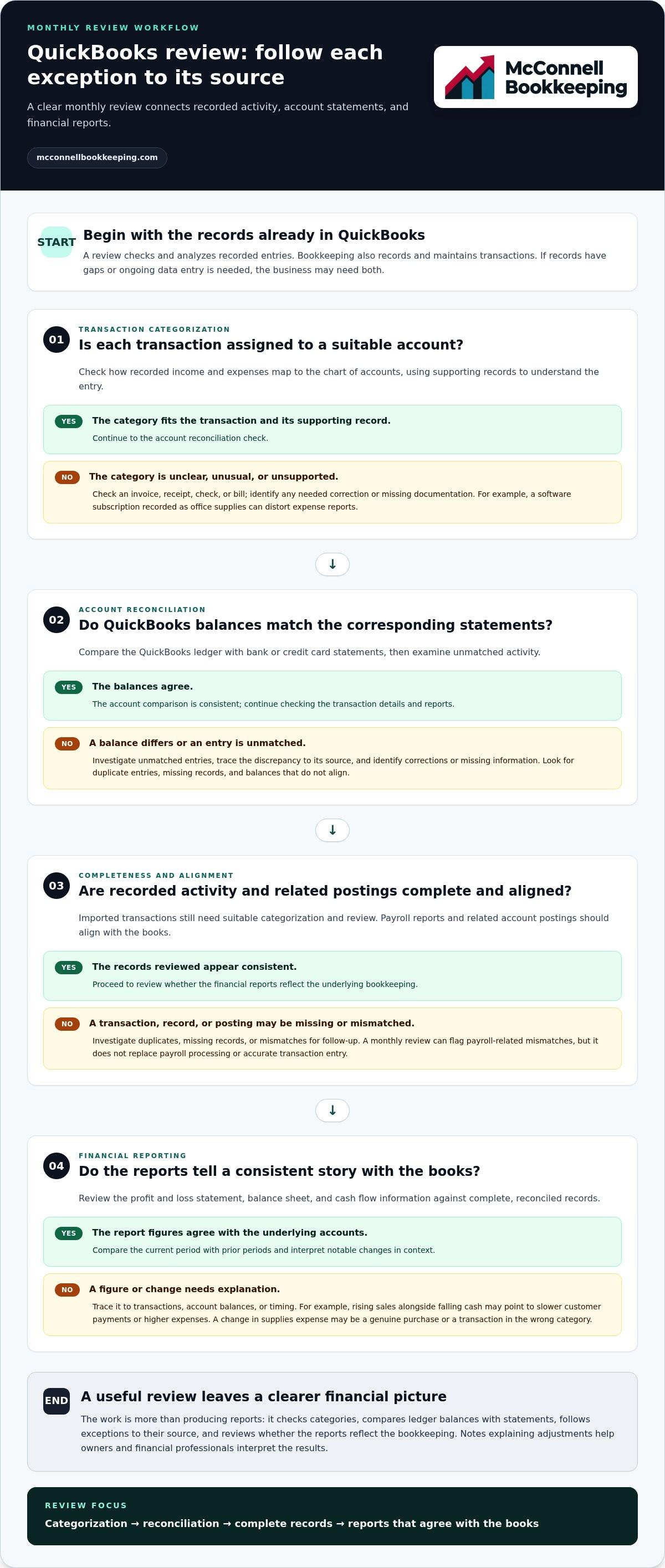
A monthly review checks whether QuickBooks transactions are assigned to suitable accounts and whether account balances match statements. The reviewer follows differences to their source and identifies corrections or missing information.
For a visual overview of month-end review practices, watch this video:
Transaction Categorization
During categorization, the reviewer checks how recorded income and expenses map to the chart of accounts. An invoice, receipt, check, or bill can help explain a transaction and support its category. For example, recording a software subscription as office supplies may distort expense reports. Look for clear explanations of unusual entries, uncategorized items, and transactions that need documentation.
Transaction, Account, and Report Review
A full review compares transaction details with account activity and checks whether reports reflect the underlying bookkeeping. The U.S. Bureau of Labor Statistics describes bookkeeping clerks as checking figures, postings, and reports for accuracy, then reconciling or reporting differences. Reviewers can investigate duplicate entries, missing records, and balances that don’t align. The goal is to identify specific exceptions, not simply produce reports.
Reconciliation connects the general ledger to external account records. The reviewer compares QuickBooks balances with bank or credit card statements, examines unmatched entries, and traces discrepancies to their source. In a case discussed by the United States Court of Appeals for the Third Circuit, monthly reconciliations compared bank statements with a company’s QuickBooks ledger to ensure their bottom lines matched. This illustrates the basic comparison, but does not replace reviewing each transaction.
What’s the difference between a QuickBooks review and monthly bookkeeping? A review checks and analyzes entries already recorded; bookkeeping also involves recording and maintaining transactions. Some businesses need both, particularly when records have gaps or ongoing data entry is part of the work.
What issues can a review identify or help prevent? It can flag miscategorized expenses, duplicate or missing transactions, unreconciled balances, and reports affected by inaccurate postings. Addressing exceptions during the review helps prevent small recordkeeping errors from carrying into later reports.
Which Scottsdale firms offer monthly QuickBooks reviews? Look for bookkeeping firms that explain how they review transactions, reconcile accounts, and prepare financial reports. For Scottsdale businesses, McConnell Bookkeeping serves the Phoenix business community, including Mesa, Phoenix, Gilbert, Tempe, Chandler, and Scottsdale. Look for relevant QuickBooks experience and a clear review process.
Are reviews available remotely for Scottsdale businesses? Yes, a remote review can use digital access to QuickBooks and electronic bank or credit card statements. The reviewer compares records, follows up on questions, and shares findings without an in-person meeting.
Accounting software can import bank and credit card activity, but imported transactions still need suitable categorization and review. Payroll entries also affect the books, so payroll reports and related account postings should align. A monthly review can identify mismatches for follow-up, but it does not replace payroll processing or accurate transaction entry.
McConnell Bookkeeping uses QuickBooks Online for monthly bookkeeping, including precise transaction recording and bank reconciliations. A clear review process helps connect recorded income and expenses with the supporting records.
Financial reporting and analysis
Reliable reports start with complete, reconciled QuickBooks records. A monthly review checks whether the figures tell a consistent story across the profit and loss statement, balance sheet, and cash flow information. For example, rising sales alongside falling cash may point to slower customer payments or higher expenses. Review the underlying entries before treating a report as ready for decisions.
Read reports in context, not as isolated totals. Compare the current period with prior periods, then trace notable changes to transactions, account balances, or timing. A sudden rise in supplies expense, for example, may reflect a genuine purchase or a transaction assigned to the wrong category. Notes explaining adjustments make reports easier for owners and financial professionals to interpret.
CPA Review of Financial Reports
A CPA’s review of financial reports is distinct from a routine bookkeeping check. A bookkeeper may organize transactions and prepare reports; a CPA may analyze financial information within an agreed engagement. Clarify whether the work covers report preparation, analysis, or a formal review, as these are different tasks. A QuickBooks ProAdvisor can also bring platform knowledge, but the title alone doesn’t define the work.
Share reports with a CPA when you need professional input on financial interpretation or tax preparation. Bring the period’s profit and loss statement, balance sheet, supporting records, and a list of unusual changes. For example, a large equipment purchase may need context before its treatment is considered. Organized documentation helps the CPA focus on the question rather than first resolving unclear bookkeeping.
Preparation of Required Reports
Which reports matter depends on why you’re reviewing the books. An owner tracking operating performance may focus on income, expenses, and cash movement. A lender or business partner may request particular statements or supporting schedules. Identify the recipient, reporting period, and decision the report must support, then confirm the figures agree with the underlying accounts.
Do Arizona tax or recordkeeping rules affect monthly QuickBooks reviews? They can shape which records a business needs to organize and which reports are useful, depending on its activities and obligations. A monthly review supports orderly records, but it does not replace advice about a specific tax or recordkeeping requirement.
Use a practical review sequence: confirm the reporting period, inspect unusual balances, trace changes to source records, and document adjustments. Then save the final reports with the related statements and explanations. This creates a clear trail for later analysis, tax preparation, or a CPA discussion. If report preparation is the gap, financial statement preparation can help present organized figures for business decisions.
Monthly financial information review
A monthly review turns current bookkeeping into a practical checkpoint for business decisions. After each month closes, compare the period’s activity with the previous month, note meaningful changes, and record questions for follow-up. For example, rising sales alongside slower customer payments may affect available cash even when reported income increases.
Start with a defined review period and complete records. Gather bank and credit card statements, invoices, receipts, bills, deposit details, and relevant loan records. Add payroll summaries when wages or payroll deductions affect the books. These documents help explain balances and provide context for changes in QuickBooks reports.
What records and access does a business need to provide for a monthly QuickBooks review? Provide access to the relevant QuickBooks company file or organized exports, plus statements and supporting records for the period. Include payroll summaries and explanations for unusual transactions, such as a large customer refund or equipment purchase.
The review’s duration depends on transaction volume, account complexity, record completeness, and how quickly questions are answered. Monthly review is the cadence: reviewing each closed month keeps the work tied to a clear reporting period. A file with missing receipts or unexplained transfers takes additional investigation compared with records that include matching documentation.
Review financial information in a consistent sequence. First, confirm the period covered and whether all expected accounts appear. Next, compare current reports with prior periods and identify changes that need explanation. Then trace each material difference to its supporting record. A change in payroll expense, for example, may relate to staffing, pay periods, or a recording issue, so check the payroll summary before drawing conclusions.
Keep bank, card, and loan statements filed by statement period.
Attach receipts or invoices to unusual purchases and customer credits.
Separate employee payroll summaries from general operating documents.
Write brief notes explaining transfers between business accounts.
Use the review to turn open questions into assigned follow-up. If a deposit doesn’t match sales records, trace it to customer payments or another source. If an account balance changes sharply, identify the responsible entry and document the explanation. This gives the owner a focused list of items to resolve instead of reports full of unexplained figures.
Close the monthly process by saving reviewed reports alongside supporting statements and notes. A consistent file structure, such as folders named by year and month, makes records easier to retrieve for later analysis or tax preparation. The owner can then use the completed information to discuss cash needs, spending changes, or employee costs with relevant advisers.
Businesses often benefit from expert guidance when dealing with unresolved questions. McConnell Bookkeeping trains clients who do not enter information into QuickBooks to understand available reports and use reporting in their daily processes and decisions. Familiarity with those reports can help owners connect figures to follow-up questions and apply reporting in routine decisions. A consistent review also keeps explanations alongside the records that support them, making it easier to see which matters have been resolved and which still need attention.
Evaluating qualifications and experience
Choose a reviewer whose experience matches your records and the work you need. A Scottsdale business with service income has different bookkeeping questions from a company managing inventory, payroll, or client funds. Describe your accounting setup, number of accounts, and reporting needs. Then ask how the reviewer checks records and explains exceptions.
QuickBooks knowledge matters, but software familiarity alone doesn’t establish review quality. Ask how the reviewer handles a transaction in the wrong account, a statement that doesn’t match the ledger, or a report with an unexplained change. A useful answer describes a process: trace the item to supporting records, document the finding, and explain what needs follow-up.
A QuickBooks ProAdvisor designation can indicate platform training. Pair it with questions about hands-on bookkeeping experience, financial statement preparation, and the types of businesses served. For example, a business with regular payroll should understand how payroll summaries flow into its books. A firm handling client funds needs someone familiar with the relevant records and controls.
Define the scope before work begins. Clarify whether the engagement covers reviewing recorded transactions, account reconciliations, report preparation, or correcting existing bookkeeping issues. Ask what you’ll receive, such as a list of exceptions, adjusted reports, or explanations of open questions. These details distinguish a focused monthly check from broader bookkeeping work.
Relevant experience: Look for experience with your business model, accounts, and reporting needs.
Clear process: Ask how exceptions are investigated, documented, and communicated.
Defined deliverables: Confirm what reports, notes, or follow-up items the review produces.
Software fluency: Discuss QuickBooks features your business uses and how they fit the review.
Communication: Notice whether explanations use plain language and address your actual questions.
Use a sample scenario to understand the reviewer’s approach. If a bank balance differs from QuickBooks, ask what records they would compare and how they would report an unresolved difference. If revenue changes sharply, ask how they would trace the change. Specific answers show whether the reviewer can connect software entries with business activity.
Discuss access and confidentiality before sharing financial records. Establish who can view the QuickBooks file, how documents will be exchanged, and who receives completed reports. For remote work, agree on a secure access method and a process for questions. A clear working arrangement keeps tasks, responsibilities, and communication organized.
Finally, compare the proposed scope with the problem you need solved. If your books contain old, inconsistent entries, a review alone may not address the underlying cleanup. If the records are current, a recurring review can focus on monthly accuracy and useful reporting. Match the reviewer’s experience and workflow to that distinction.
What does a monthly QuickBooks review service include?
A monthly QuickBooks review typically checks activity and records for a defined accounting period. The reviewer examines transaction entries, account balances, supporting documents, and reports, then records items needing attention. For example, a customer deposit can be compared with its invoice and bank activity to confirm the books reflect it clearly.
The work often follows a repeatable close process. First, the reviewer confirms the period and accounts under review. Next, they inspect entries and balances, trace questions to supporting records, and note unresolved differences. Finally, they share findings and relevant reports, helping the owner see what was reviewed and what needs follow-up.
Transaction review: Look for entries that need explanation, supporting documents, or correction.
Account checks: Compare recorded balances with statements and investigate differences.
Books cleanup: Address older errors or incomplete records that affect current reporting.
Report preparation: Organize financial information for business review and planning.
Follow-up notes: Identify open questions, needed documents, and next actions.
Scope matters. A review may focus on checking transactions already entered, while ongoing bookkeeping can also include recording activity. If the file contains older inconsistencies, cleanup may be needed before current reports provide a useful view. Clarify which accounts, reports, and records the review covers, and whether the work includes corrections or only findings.
Deliverables should make the review useful after the work is complete. A business owner should receive a clear record of the period reviewed, reports reflecting the reviewed books, and notes explaining open items. For instance, if a transfer between accounts appears unmatched, the notes should identify the transaction and the information needed to resolve it.
Monthly reconciliations help keep account records aligned. The reviewer compares statements with QuickBooks balances and traces differences to their source. Consistent monthly bank reconciliations can help owners spot unresolved items before they carry into later reporting periods. The review should also cover credit card accounts or other records relevant to the business.
Choose a scope that fits your records: a routine review for current books, or cleanup when older entries need attention. To organize account records through monthly bank reconciliation support, take the next step toward a clearer monthly close.
McConnell Bookkeeping: Monthly Bank Reconciliations
McConnell Bookkeeping provides monthly bank reconciliations to help business owners keep QuickBooks balances aligned with bank statements. Turn to this support when account activity needs a consistent monthly review or differences require follow-up. Organized reconciliations create a clearer foundation for understanding the books and preparing financial information.
If older entries or incomplete records affect the review, Books Cleanup can help address those bookkeeping issues. Financial Statement Preparation can make the resulting information easier to use, while Accounts Receivable Management supports oversight of customer balances and payments. The right next step depends on whether your main need is reconciling accounts, organizing records, or preparing statements.
For bookkeeping support that fits your records and reporting needs, contact McConnell Bookkeeping.
Build a Steadier Monthly Routine
Decide what you want each monthly close to make easier. You might want to understand cash movement sooner, keep records ready for business decisions, or spend less time sorting out unfinished entries. Those priorities can guide the review scope and help create a routine that fits your business.
For Scottsdale businesses comparing a monthly QuickBooks review service, McConnell Bookkeeping provides monthly bookkeeping, including monthly bank reconciliations, as well as financial statement preparation and book clean-up. These services support different needs, from keeping account records aligned to organizing books that need attention. Choose the starting point that reflects your records and the questions you want your financial information to answer.
Discussing your bookkeeping needs can help clarify a practical next step. Contact McConnell Bookkeeping today to talk about support for your books and monthly financial routine. A clear process can help you move forward with greater confidence.
Frequently Asked Questions
How much does monthly QuickBooks review cost in Scottsdale, Arizona?
The cost depends on transaction volume, the number and complexity of accounts, record condition, and the work included. For a monthly QuickBooks review service in Scottsdale, a quote can reflect your bookkeeping needs. For example, a business with unreconciled accounts or older entries requiring cleanup may need a different scope from one reviewing current records alone.
How do I choose a QuickBooks ProAdvisor or accounting firm in Scottsdale?
Choose a firm whose demonstrated QuickBooks experience fits your business needs. Ask for a sample of its review notes with confidential details removed and check whether findings are explained clearly. Clarify who handles your file, how questions are shared, and what happens when an issue needs correction. For Scottsdale businesses, consider whether the firm’s bookkeeping support fits your ongoing reporting process.



Comments