Bookkeeping for Tempe Service Businesses

For service providers, bookkeeping is more than recording payments. It keeps invoices, expenses, bills, and account activity organized. Bookkeeping for service businesses in Tempe typically includes regular transaction updates, bank and credit card reconciliations, tracking unpaid invoices and bills, and preparing financial reports.
Clear records help you see what’s coming in, what’s due, and how your business is performing, without spending working hours sorting through transactions. This information also supports practical day-to-day decisions.
This article explains what small-business bookkeeping includes and how it supports service providers. You’ll learn what happens during monthly bookkeeping, why reconciliations and timely records matter, and what financial statements can show. You’ll also see how bookkeeping differs from accounting and which factors shape a service business’s needs. The goal is a practical picture of the process, so you can recognize well-maintained books and understand how they bring clarity to your business finances.
Table of Contents
Reconciliations, payables, receivables, payroll, and reports
For a service business, dependable bookkeeping connects customer payments, operating expenses, payroll, and monthly reports. A consistent review cycle helps owners understand account activity and follow up on money owed.
Account Reconciliation and Transaction Tracking
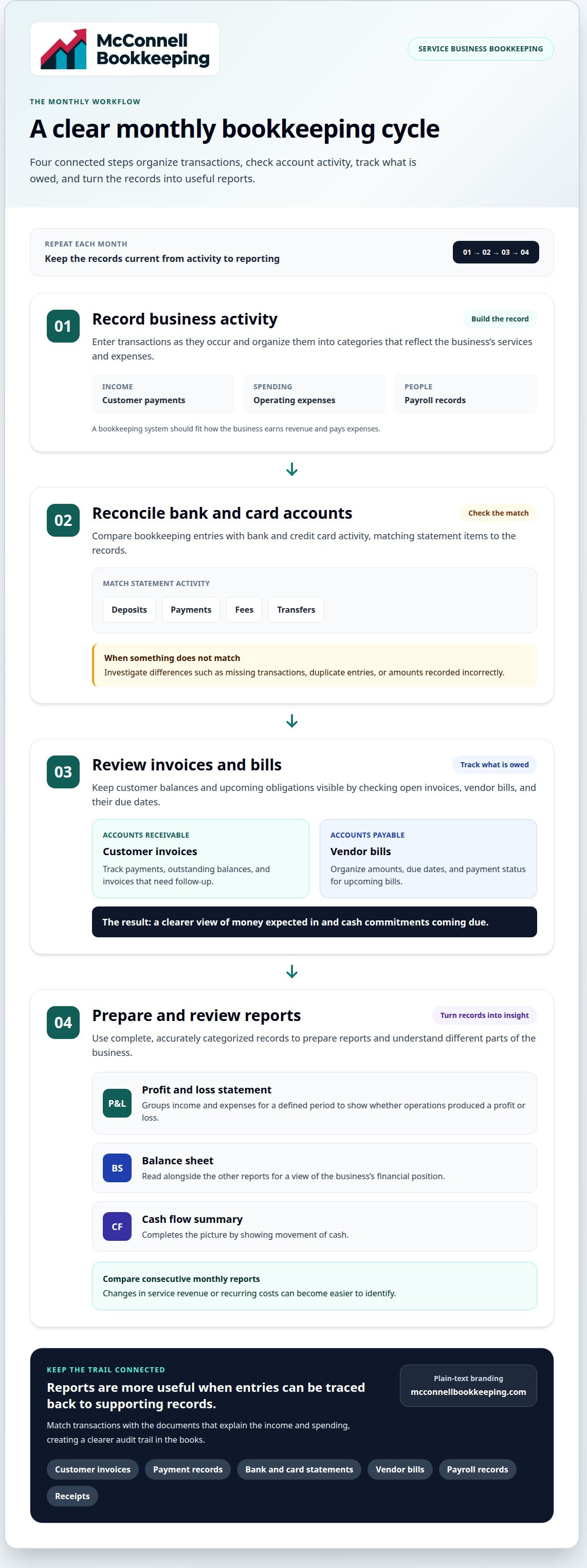
Reconciliation compares recorded transactions with bank and credit card activity. Each month, a bookkeeper can match deposits, payments, fees, and transfers, then investigate discrepancies. A complete system also tracks unpaid customer invoices, vendor bills, and due dates. For example, a cleaning company can review an overdue invoice alongside upcoming supply bills to see its cash commitments more clearly.
Choose a bookkeeper for regular transaction organization and reconciliations, a CPA for accounting analysis or tax-related work, and software for recording and organizing transactions. Software supports the process, but it doesn’t replace professional judgment when entries need review.
Monthly Profit and Loss Statements
A monthly profit and loss statement groups income and expenses for a defined period, showing whether operations produced a profit or loss. Read it alongside a balance sheet and cash flow summary: together, these reports show business performance, financial position, and movement of cash. Comparing consecutive monthly reports can help identify changes in service revenue or recurring costs.
Bookkeeping technology can organize transaction entries and generate reports, but useful results depend on accurate categories and complete records. A monthly workflow should include recording activity, reconciling accounts, reviewing open invoices and bills, and preparing reports. Clear digital records also make it easier to trace a report entry back to its transaction.
For investor-ready reporting, consistency matters. Keep revenue, expenses, outstanding invoices, and account balances organized by period, with supporting transaction records available. This allows a potential investor to review reports with a clearer view of operating activity. Bookkeeping organizes financial information, but it doesn’t guarantee funding or replace an investor’s analysis.
Tempe service businesses should retain records that explain income and spending, including customer invoices, payment records, bank and credit card statements, vendor bills, payroll records, and receipts. Matching each transaction to its supporting document creates a clearer audit trail in the books.
A new service business can begin with three practical steps: choose bookkeeping software, create categories that reflect its services and expenses, then record transactions as they occur. Reconcile bank and credit card activity monthly, track invoices and bills, and review monthly reports. Arizona business owners can use this routine to keep records current as operations develop.
Customized bookkeeping and accounting systems
A useful bookkeeping system reflects how a service business earns revenue and pays expenses. In Arizona, clear categories and regular reviews make account activity easier to interpret.
Payables and Receivables Tracking
Accounts payable tracking organizes vendor bills by amount, due date, and payment status. Accounts receivable tracking records customer invoices, payments, and outstanding balances. For example, a design firm can separate client project invoices from software subscriptions and contractor bills. This structure helps owners see which customer balances need follow-up and which obligations are approaching. Align categories and tracking steps with the business’s actual billing cycle.
For service businesses, sales-tax treatment depends on the service and transaction. Record any sales-tax amounts separately from service revenue so the books distinguish collections from earned income.
Monthly Account Reconciliation
Monthly reconciliation compares bookkeeping entries with bank and credit card statements. The review can reveal missing transactions, duplicate entries, or incorrectly recorded amounts. A bookkeeper matches each statement item to the books, then investigates differences before closing the period. For example, a bank fee on a statement should have a corresponding entry. Regular reconciliation gives the business a more consistent record of account activity.
Arizona and Tempe filing deadlines depend on the tax type and the filing schedule assigned to a business. There isn’t one date that applies to every small business, so organize records around the applicable schedule.
Business Accounting Support
Bookkeeping records and organizes transactions; accounting interprets, analyzes, and reports on that information. A bookkeeping system can provide organized figures for accounting review, including income categories, expense records, and reconciled balances. The right support depends on the task: routine transaction organization is different from interpreting financial results. Keeping those roles clear helps a business understand what its records show and which questions may need deeper accounting analysis.
Tempe businesses looking for bookkeeping support can consider whether a provider’s process covers their workflow, including invoice tracking, bill organization, and monthly reconciliations. Check that the process accounts for the records the business uses and produces reports suited to its decisions. A solo consultant with few recurring bills may need a simpler setup than a dental practice with payroll and frequent customer payments.
To customize a system, start by mapping how the business receives payments and handles expenses. Set categories for service income and recurring costs, then establish a process for entering transactions and reviewing open invoices and bills. Choose bookkeeping technology that supports those steps and produces useful reports. Keep categories consistent across periods so changes in revenue or expenses remain clear.
For dependable monthly reconciliation support, a consistent review process can help keep account records aligned.
Costs and risks of disorganized financial records
Disorganized records make it harder to tell whether available cash can cover upcoming expenses. A consultant might have completed client work but still be waiting for payment, while rent, software, and contractor bills remain due. If invoices and obligations aren’t recorded consistently, the bank balance alone can give an incomplete picture of cash flow. A current ledger helps owners plan spending around expected receipts and known commitments.
Transaction recording is the foundation. For each deposit or expense, record the date, amount, account, and business purpose, then keep supporting documents together. For example, a home-repair business should be able to connect a customer payment to its invoice and a materials purchase to its receipt. Missing or miscategorized transactions can distort income and expense totals, making financial statements less accurate and harder to interpret.
Small businesses should update their books weekly or at least monthly. A weekly routine captures customer payments and new expenses while details are fresh. Monthly review can catch incomplete entries before the owner relies on the numbers for planning. For a business with changing workloads, comparing recorded income with upcoming bills can reveal a potential cash gap early enough to adjust spending or follow up on outstanding invoices.
Accurate records also create a clearer trail for financial review. Keep invoices, receipts, payroll records, statements, and transaction entries organized by period so each reported amount can be traced to its supporting record. If an expense appears in the books but its receipt is missing, flag it for follow-up rather than treating the file as complete. Organized documentation makes financial information easier to explain during an external review.
Financial statement preparation depends on complete, consistently categorized transactions. A profit and loss statement shows how revenue and expenses compare, while a balance sheet presents assets, liabilities, and equity. If a service provider records a customer refund as a new operating expense without context, the reported totals may obscure what happened. Reviewing unusual entries and correcting errors before preparing reports produces a more useful picture of business activity.
Disorganized books create avoidable administrative work. Reconstructing a period may mean matching bank activity with old invoices, receipts, and payment records. Book clean-up involves reviewing historical transactions, correcting miscategorized entries, and reconciling accounts. A practical starting point is to organize documents by month, identify transactions without supporting records, and resolve gaps before preparing current reports. This makes recordkeeping repeatable instead of a periodic scramble.
Bookkeeping support for service providers
Service businesses often earn income through completed work, appointments, retainers, or recurring client agreements. Each model creates a different recordkeeping pattern. A photographer may connect a project invoice with a deposit and final payment, while a consultant may track recurring client fees. Bookkeeping should reflect how money moves through the specific business, not force every service into one generic category.
Start with the service workflow. Record how a client engages the business, when revenue is earned, and when payment arrives. Then organize expenses around the work they support, such as a consultant’s travel or a repair provider’s materials. These distinctions help owners review which services generate income and which costs accompany delivery. Clear categories also make monthly reports more useful.
Client payment timing deserves its own routine. Review open invoices, identify overdue balances, and note expected payment dates. For example, a freelance designer may finish a project before the client pays the final invoice. Tracking that receivable separately from money already deposited helps distinguish completed work from cash available in the bank.
Small businesses should update their books weekly or at least monthly. A weekly review can capture recent client payments, supplier purchases, and payroll activity while details are accessible. A monthly close gathers remaining entries, resolves questions, and prepares reports for the period. A repeatable schedule helps prevent a busy service calendar from pushing recordkeeping aside.
Service providers can shape reviews around their operating cycle. A seasonal landscaper might compare active-work months with quieter periods, while a therapist could organize revenue by service type. These are examples of useful reporting categories, not universal requirements. The practical test is whether categories help the owner understand business activity without making routine transaction entry confusing.
Bookkeeping support helps separate financial recording from operational decisions. Reports show recorded revenue and expenses, but owners still decide how to schedule work, set priorities, or adjust spending. For instance, a contractor reviewing rising materials costs might examine project records before changing estimates. Accurate, well-organized information gives that discussion a clearer starting point.
Before setting up a workflow, map the steps from client agreement to payment and expense recording. Identify where invoices are created, how payments are documented, and who supplies receipts or payroll details. Then schedule a regular review to address missing information. This process makes responsibilities visible and gives the business a consistent way to maintain its records.
A suitable bookkeeping routine should match the business’s services, client billing patterns, expense types, and reporting needs. A solo provider with recurring appointments may need different categories from a firm managing project-based work and subcontractors. Review the workflow as services change so bookkeeping continues to reflect current operations rather than an outdated business model.
What bookkeeping do Tempe service businesses need?
The right setup depends on how a Tempe business earns income, pays workers, and handles expenses. A solo consultant and a dental office may both need organized transaction records, but their workflows differ. Choosing bookkeeping for service businesses in Tempe starts with mapping client billing, vendor payments, payroll activity, and the reports used to review performance.
Every service business needs a reliable way to record income and expenses. A consultant might track project invoices, client deposits, software subscriptions, and travel costs. A repair business may connect job payments with materials purchases. Consistent categories help owners compare activity across reporting periods and understand which services generate revenue.
Receivables support matters when clients pay after work is completed. Track each invoice, payment received, and outstanding balance so follow-up can focus on specific accounts. Payables tracking organizes vendor bills and due dates. For example, a design studio can distinguish an unpaid client invoice from a software bill due soon, making cash commitments easier to review.
Monthly bank reconciliations compare recorded activity with account statements and help identify missing or duplicate entries. Small businesses should update their books weekly or at least monthly. A weekly routine captures recent client payments and expenses; the monthly review resolves incomplete items and prepares the period’s records.
Businesses with employees also need payroll activity recorded accurately alongside other expenses. Keep payroll records organized by pay period and connect recorded amounts to the relevant business accounts. A growing service company can then review labor costs with other operating expenses instead of treating payroll as an untracked payment outside its bookkeeping process.
Financial statements help owners use organized records to review business activity. A monthly profit and loss statement summarizes income and expenses, while a balance sheet shows assets, liabilities, and equity. A cash flow summary focuses on money moving into and out of the business. Together, these reports support decisions such as reviewing recurring costs or planning around expected client payments.
Use this checklist to identify where support may be most useful:
Solo provider: Record service income, expenses, invoices, and account activity.
Employer: Add payroll records and regular review of labor-related transactions.
Invoice-heavy business: Track open client balances and payment follow-up.
Practice with specialized records: Choose bookkeeping organized around its operating needs, such as law or dental practice activity.
A tailored bookkeeping approach for service businesses in Tempe should fit the work, billing patterns, and reporting needs involved. McConnell Bookkeeping provides service-business support, including monthly bank reconciliations, accounts receivable management, and financial statement preparation. Explore bookkeeping support for your business when you need a consistent process for organized records and reporting.
McConnell Bookkeeping
McConnell Bookkeeping helps Tempe service businesses keep financial records organized and useful for everyday decisions. Turn to the firm when reconciliations need consistent attention, customer invoices need follow-up, or older transactions make current reports difficult to trust.
Monthly bank reconciliations align recorded activity with account statements, while accounts receivable management helps track client invoices and payments. Financial statement preparation turns organized records into reports that clarify business performance. If past entries are incomplete or miscategorized, book clean-up can restore a more reliable starting point.
These services can support different stages of bookkeeping, from catching up on records to maintaining a regular monthly process. Contact McConnell Bookkeeping to discuss the bookkeeping support that fits your service business.
Make organized records part of your next stage
Decide what you want your financial records to help you manage. You might need a clearer view of client payments, a dependable routine for account reviews, or reports that support business decisions. Your bookkeeping process should fit those priorities and the way your service business operates. For bookkeeping for service businesses in Tempe, steady, well-organized records provide a more useful foundation as your business evolves.
McConnell Bookkeeping offers Monthly Bank Reconciliations, Financial Statement Preparation, and Books Cleanup to support organized financial records. If you’re ready to discuss the bookkeeping needs of your service business, contact McConnell Bookkeeping. A thoughtful next step can help you move forward with greater clarity and confidence.
Frequently Asked Questions
What Is Small Business Bookkeeping and Why Does It Matter?
Small-business bookkeeping records financial activity so owners can understand what happened in their business. It can help a Tempe service provider identify whether a client payment arrived, an expense was recorded, or a vendor bill remains outstanding. These records also give accounting professionals organized information to interpret. Without consistent transaction records, owners may have difficulty distinguishing available cash from income that has not yet been collected.
How often should a small business update its books?
Small businesses should update their books weekly or at least monthly. A weekly review captures details from recent activity, such as a customer refund or new supplier purchase. Monthly updates can suit a business with fewer transactions, provided records stay current and complete. For an Arizona service provider with frequent client payments, a regular schedule can prevent unanswered transaction questions from piling up.
What is the average cost of bookkeeping services in Tempe, AZ?
The cost depends on factors such as transaction volume and record complexity, and is provided after a quote request. A service business with recurring invoices and few expense categories may require a different bookkeeping workload from one with payroll, numerous vendor bills, and older records needing cleanup. Consider the bookkeeping tasks and reporting needs involved, rather than assuming one average fee applies to every Tempe business.
How often should a service business reconcile accounts and review financial reports?
Reconcile accounts monthly and review financial reports after recording the period’s activity. This timing helps owners assess results using a consistent set of records. A business can also note key changes during the month, such as an unexpected expense or delayed client payment, and discuss them during its monthly report review. For instance, a Tempe consultant might compare current project income with recurring operating costs.
What bookkeeping mistakes and compliance risks should service businesses avoid?
Avoid entering the same transaction twice, leaving business purchases uncategorized, or recording client payments without matching invoice details. Keep payroll records and supporting documents organized, and separate business activity from personal spending in the books. For example, a receipt without a clear business purpose can make an expense difficult to explain later. Consistent categories and complete records make financial reviews more straightforward, but bookkeeping alone doesn’t replace professional advice about specific compliance requirements.



Comments