Accounts Payable Best Practices for Small Business: The 2026 Phoenix Business Guide

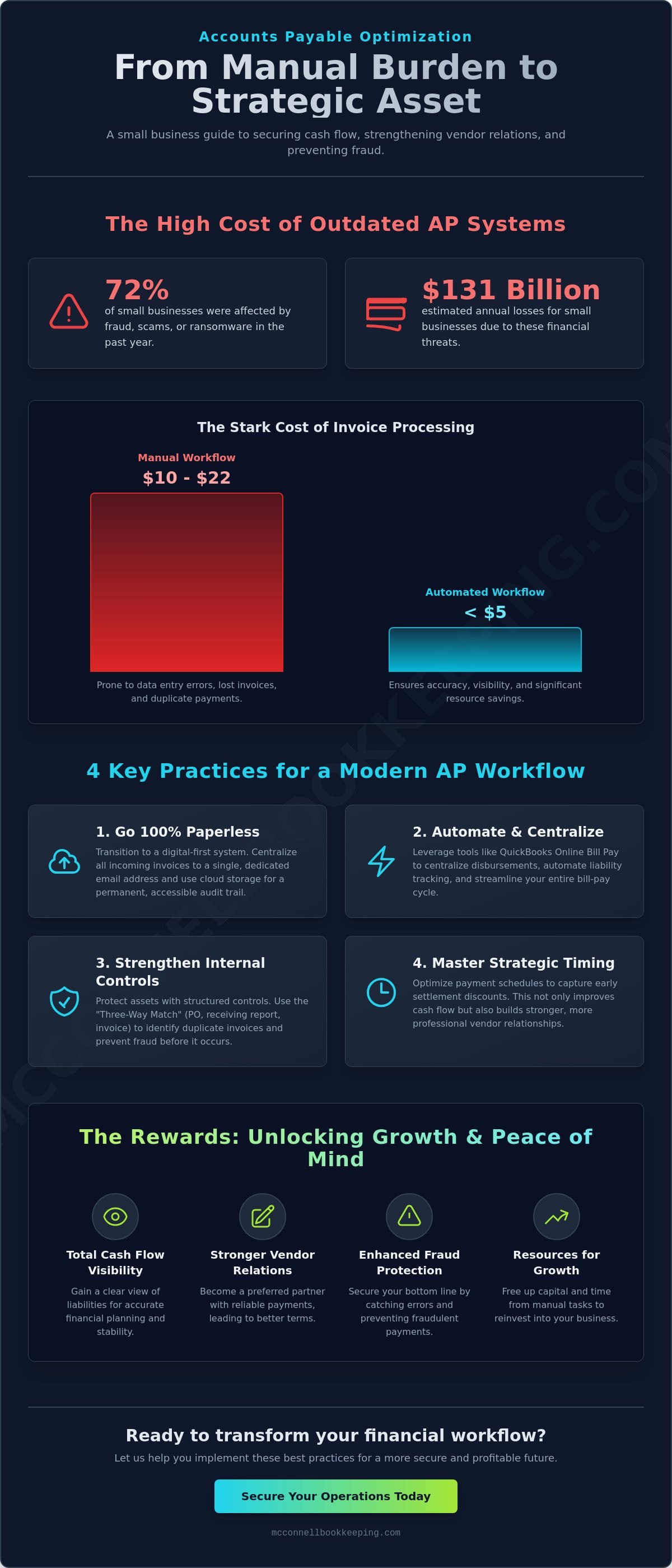
Did you know that 72% of small businesses were affected by fraud, scams, or ransomware in the past year, resulting in an estimated $131 billion in annual losses? It's a sobering reality for Phoenix entrepreneurs who often feel forced to choose between growing their company and auditing every single invoice for errors. You likely recognize the frustration of manual data entry in QuickBooks or the sting of missing an early payment discount because a paper bill got lost in the shuffle. Strained vendor relationships and the fear of duplicate payments can make your financial office feel like a source of constant stress.
We believe your financial workflow should empower your growth rather than hinder it. By implementing accounts payable best practices for small business, you can transition to a sophisticated, paperless system that offers total visibility into your cash flow. This guide provides expert-vetted strategies to help you secure your operations against fraud and build more resilient partnerships with your vendors. We'll explore how a streamlined approach to bill-pay creates the accuracy you need for tax season and the peace of mind you deserve as a proactive business leader.
Key Takeaways
Transition to a 100% paperless workflow to ensure every invoice is captured and accessible across your entire Phoenix operation.
Implement accounts payable best practices for small business by leveraging QuickBooks Online Bill Pay to centralize disbursements and automate liability tracking.
Protect your business assets with structured internal controls that identify duplicate invoices and prevent fraud before it impacts your bottom line.
Master the strategic timing of payments to capture early settlement discounts and maintain stronger, more professional vendor relationships.
Table of Contents
Why Accounts Payable Optimization Matters for Arizona Small Businesses
Your business reputation is built on more than just the quality of your services; it's built on the integrity of your word. Accounts payable represents the heartbeat of your operational credibility. When you implement accounts payable best practices for small business, you transform a reactive administrative burden into a proactive strategic asset. This "diligent guardian" approach protects your profit margins from the silent drain of late fees and duplicate payments that often plague unorganized systems. Mastering this workflow ensures that your business remains a symbol of reliability in the local community.
To better understand the foundational concepts of managing your bills effectively, watch this helpful video:
In the competitive landscape of the East Valley, business growth depends on your ability to scale without ballooning your overhead. Research from Lido in May 2026 indicates that manual invoice processing can cost a business between $10 and $22 per document. By contrast, automated or semi-automated workflows reduce that cost to under $5. These savings represent direct injections of capital back into your Phoenix-based enterprise. By adopting accounts payable best practices for small business, you eliminate the hidden costs of manual data entry and free up resources for strategic reinvestment.
The Cash Flow Connection: Beyond Just Paying Bills
Predictability is the ultimate antidote to administrative stress. When your bill-pay cycle is optimized, you gain a clear view of your upcoming liabilities, ensuring your bank balance remains stable. This visibility is essential for accurate Financial Statement Preparation. Knowing exactly what you owe and when you owe it provides a psychological relief that lets you focus on high-level growth rather than worrying about surprise withdrawals. A structured AP system turns your data into a roadmap for future spending.
Local Vendor Relationships in Phoenix and Mesa
Your standing in the Arizona business community is closely tied to your payment habits. Building trust with local suppliers in Phoenix and Mesa requires consistent, professional payment cycles. Being recognized as a reliable partner often leads to better credit terms and priority service when supply chains tighten. A disciplined AP process ensures you're the first customer they call when new opportunities or discounts arise. This professional courtesy reinforces your position as a respected local leader and a preferred partner for future collaborations.
Foundational AP Best Practices: Organization and Data Integrity
Precision in your financial records begins with a commitment to organized data. Moving to a 100% paperless environment is a cornerstone of modern Accounts payable best practices. This transition starts by standardizing how you receive bills. By creating a single, dedicated email address for all incoming invoices, you eliminate the risk of documents getting lost in personal inboxes or buried under physical mail. This simple step centralizes your intake and ensures that every liability is accounted for from the moment it arrives.
Adopting these foundational accounts payable best practices for small business creates a "diligent guardian" effect over your company's resources. Small teams should also implement a simplified version of the "Three-Way Match." By verifying that the purchase order, the receiving report, and the final invoice all align, you prevent overpayments and identify errors before they affect your cash flow. This level of scrutiny protects your profit margins and reinforces a culture of accountability within your organization.
The Digital Shift: Ditching the Paper Trail
Cloud storage provides a bridge of transparency between you and your financial partners. When you scan and store digital receipts immediately, you gain the freedom of a clutter-free office and the security of a permanent audit trail. This is particularly valuable for Phoenix-based businesses that may face document loss during office moves or seasonal transitions. If you find your current records are a bit chaotic, a professional books cleanup can restore the order you need to move forward with confidence.
Vendor Management and Data Hygiene
A clean Vendor Master File in QuickBooks is essential for accurate reporting. You should record W-9 information as part of your initial vendor onboarding process. This proactive habit saves you from the stressful "1099 scramble" every January. Regularly auditing your vendor list to remove duplicates or inactive accounts keeps your database lean and efficient. Accurate categorization of these expenses is the first step toward truly understanding your business financials for better long-term decisions. Proper data hygiene ensures that your year-end reporting is a reflection of your success rather than a source of confusion.
Streamlining the Workflow with QuickBooks Online Best Practices
Efficiency in your back office isn't just about speed; it's about creating a system that works while you sleep. While our previous section focused on organization, the true transformation happens when you leverage the software you already own. Utilizing QuickBooks Online Bill Pay allows you to centralize your disbursements, ensuring that every payment is tracked within the same ecosystem where your books live. This integration eliminates the need for manual check-writing and provides a clear audit trail for every dollar leaving your Phoenix-based business.
Setting up automated bank feeds is another vital component of accounts payable best practices for small business. When your bank transactions flow directly into your accounting software, you gain real-time visibility into your current liabilities. This proactive approach prevents the "month-end surprise" where expenses appear larger than anticipated. By connecting your accounts, you ensure that your QuickBooks Online training translates into actual time savings and financial clarity.
Automating the Mundane Tasks
Modern technology has made "touchless" processing a reality for the East Valley entrepreneur. As of May 2026, 29% of AP teams are utilizing AI for automated data extraction, a significant jump from only 7% just two years prior. QuickBooks' built-in AI can now read your uploaded invoices and suggest categorizations, reducing the need for tedious manual entry. You can further streamline this by setting up "Rules" to handle recurring vendor expenses automatically. This automation liberates you from repetitive tasks, allowing you to focus on high-level strategy and business development.
Approval Workflows for Better Control
Even a two-person team benefits from a formal check-and-balance system. When implementing accounts payable best practices, it's essential to define who can authorize a payment versus who can execute it. Using digital timestamps within your workflow creates a permanent history of who approved each expense, which is invaluable during tax season or an internal review. This structure doesn't imply a lack of trust; rather, it provides the "diligent guardian" oversight that keeps your business secure. Utilizing recurring bill features for fixed Phoenix operating costs ensures you never miss a deadline, further cementing your reputation as a professional and reliable partner.
Strengthening Internal Controls and Preventing Fraud in 2026
Small businesses in the East Valley are prime targets for sophisticated financial crimes. According to an April 2026 report from the Public Private Strategies Institute, 72% of small businesses faced fraud or scams in the last year, resulting in billions of dollars in collective losses. Adopting accounts payable best practices for small business is your primary defense against these evolving threats. The "Segregation of Duties" principle is a vital starting point; it ensures that the person who enters an invoice is not the same individual who authorizes the final payment. This simple division of labor creates a natural check-and-balance system that protects your company's cash from both internal errors and external bad actors.
Preventing duplicate payments and fraud requires a disciplined approach to data entry. Research from DOKKA in March 2026 indicates that 66% of AP teams still manually key in invoice data, a practice that significantly increases the risk of human error. Beyond manual mistakes, you must remain vigilant against Business Email Compromise (BEC). Camden National Bank reported in March 2026 that 62% of fraud originates from email-based attacks like phishing. Verifying any changes to vendor bank account details through a direct phone call, rather than relying on email instructions, is a critical step in maintaining a secure bill-pay workflow.
Conducting regular monthly bank reconciliations serves as your final safety net. This process allows you to identify discrepancies between your ledger and your bank balance before they snowball into larger financial crises. It provides the clarity you need to ensure every outgoing dollar is legitimate and properly recorded.
Identifying Common Red Flags
A "diligent guardian" approach involves watching for specific patterns that signal trouble. Sudden rounded-dollar payments often indicate fabricated invoices; authentic business transactions typically include cents. You should also audit your vendor list regularly to spot "ghost vendors" or names that look suspiciously similar to your established partners. Unusual changes in vendor bank account details should always trigger an immediate internal review. These proactive habits prevent small leaks from becoming major capital drains on your Phoenix enterprise.
The Role of Professional Oversight
An outside partner provides a neutral third-party perspective that is difficult to achieve with a small internal team. This professional oversight identifies vulnerabilities in your system before they can be exploited. Proactive monitoring is always more cost-effective than a reactive books cleanup after a fraud event has occurred. Transitioning to secure payment methods like ACH or E-payments further reduces the risk of check washing and mail theft. If you want to secure your workflow and stop worrying about fraud, our professional Accounts Payable Management services provide the expert oversight your business deserves.
Strategic AP Management: Optimizing Terms and Cash Flow
Strategic accounts payable management is the final step in transitioning from a reactive business owner to a proactive leader. While previous sections focused on security and organization, this stage focuses on using your data to maximize liquidity. Implementing accounts payable best practices for small business allows you to treat your bills as a strategic lever for growth. By understanding the timing of your outflows, you can protect your cash reserves while simultaneously strengthening your vendor partnerships.
One of the most effective ways to boost your bottom line is by capturing early payment discounts. A common term like "2/10, net 30" offers a 2% discount if the bill is paid within ten days. While 2% might seem small, the annualized return on investment for paying early can exceed 36%. If your cash flow allows, taking these discounts is essentially earning a guaranteed return on your capital. Conversely, when cash is tight, knowing when to hold onto your funds until the final due date is equally important for maintaining operational stability.
Negotiating better terms with your long-term Gilbert and Chandler suppliers becomes much easier when you have a history of reliability. Vendors are often willing to extend payment windows or offer better pricing to "good payers" who provide predictable income. These relationships are the backbone of the Arizona business community, and your professional approach to AP management makes you a preferred partner in the local market. Using your data to forecast future cash requirements ensures you never overextend your resources.
Mastering the AP Aging Report
The AP Aging Summary is your most powerful tool for forecasting future cash requirements. This report breaks down your liabilities into "Current" and "30, 60, or 90" day buckets, providing a clear visual of upcoming financial obligations. By reviewing these buckets, you can identify which vendors are critical to your daily operations and must be prioritized. Sharing these detailed insights with your strategic mentor ensures that your long-term planning is based on accurate, real-time data rather than guesswork. This level of oversight turns your accounts payable best practices for small business into a competitive advantage.
The Path Forward: From Stress to Financial Clarity
A streamlined bill-pay process liberates you from the administrative stress of manual entry and late-fee anxiety. Transitioning to professional Accounts Payable Management ensures that your books remain accurate and your vendor relationships stay strong. For Mesa business owners ready to upgrade their systems, the next step is moving toward a paperless, automated workflow that provides total financial clarity. You've built your business through hard work and vision; let expert oversight protect the prosperity you've created. By mastering your workflow today, you ensure a more stable and profitable tomorrow.
Empowering Your Business Through Financial Precision
Mastering your bill-pay process is the foundation of long-term operational stability. By implementing accounts payable best practices for small business, you protect your company from fraud while unlocking the clarity needed for strategic growth. You've learned how digital organization, automated QuickBooks workflows, and tight internal controls prevent administrative stress and preserve your hard-earned capital. These strategies ensure your Phoenix or Mesa business remains resilient and respected among local vendors. Transforming these clerical tasks into a strategic asset allows you to lead with confidence rather than reacting to surprises.
Expert oversight provides the ultimate peace of mind. As a QuickBooks Online Certified ProAdvisor specializing in Mesa and Phoenix small business growth, we offer the expert-led training and operational management you need to thrive. Whether you require a one-time books cleanup or ongoing support, we act as your diligent guardian and strategic mentor. Let McConnell Bookkeeping streamline your accounts payable today. Your focus belongs on your vision; let us handle the precision of your books. We're invested in your success and ready to help your business reach its full potential.
Frequently Asked Questions
What are the most important accounts payable internal controls for a small business?
Segregation of duties is the most critical internal control for protecting your capital. By ensuring that the person who approves an invoice is different from the person who executes the payment, you create a natural check against errors and fraud. Implementing digital approval workflows and conducting monthly bank reconciliations further strengthens your defenses. These steps provide the oversight needed to ensure every outgoing dollar is legitimate and properly recorded within your accounting system.
How can QuickBooks Online help me automate my accounts payable process?
QuickBooks Online automates your workflow through features like automated bank feeds and AI-powered data extraction. These tools read your uploaded invoices and suggest categorizations, which significantly reduces manual data entry. By leveraging QuickBooks Online Bill Pay, you can centralize your disbursements and track liabilities in real time. This automation transforms a tedious administrative task into a streamlined, paperless process that saves you hours of manual labor every month.
Why is it risky for a small business owner to handle all AP tasks alone?
Handling all AP tasks alone increases the risk of burnout and oversight errors that can drain your cash flow. Without a second set of eyes, it's easy to miss duplicate invoices or fall victim to sophisticated phishing scams. Professional accounts payable management provides a neutral third-party review that identifies vulnerabilities before they become costly problems. Delegating these tasks allows you to focus on high-level growth while ensuring your financial integrity remains intact.
How do I handle a duplicate payment if I’ve already sent the funds?
You should immediately contact the vendor to request a refund or a credit memo for your next purchase. Once the vendor confirms the overpayment, record the transaction in QuickBooks to ensure your books remain accurate. It's essential to track these credits closely so they aren't forgotten during future payment cycles. Establishing a "Three-Way Match" process can prevent these duplicates from happening in the future by verifying invoices against purchase orders and receiving reports.
What is the difference between accounts payable and accounts receivable?
Accounts payable represents the money your business owes to suppliers and vendors for goods or services received. Conversely, accounts receivable is the money your customers owe you for the work you've completed. Balancing these two is vital for healthy cash flow management. While AP focuses on managing liabilities and vendor relationships, AR focuses on collecting revenue to fund your operations and fuel future growth in the Phoenix market.
How often should a small business perform an accounts payable audit?
You should perform a high-level review of your accounts payable monthly during your bank reconciliation process. This habit ensures that all recorded expenses align with your actual bank activity. For a more comprehensive review, conduct a formal audit of your Vendor Master File annually to remove inactive accounts and verify contact information. Regular oversight is a core component of accounts payable best practices for small business, helping you maintain data integrity throughout the year.
Can I use a credit card for accounts payable to improve cash flow?
Using a business credit card for accounts payable can provide a helpful cash flow float by extending your payment window. This strategy is effective for managing short-term timing gaps between your payables and receivables. However, you must pay the balance in full each month to avoid high interest charges that can quickly erase any benefits. Always ensure that these transactions are properly categorized in your accounting software to keep your financial statements accurate.
What documents should be attached to every bill in my accounting software?
You should attach the original vendor invoice, the corresponding purchase order, and a receiving report or proof of delivery to every bill. Storing these digital documents within your accounting software creates a permanent audit trail that is invaluable during tax season. This practice ensures that you have all the necessary evidence to support every expense. Following these accounts payable best practices for small business makes your records transparent and easily accessible for future reviews or professional oversight.


Comments